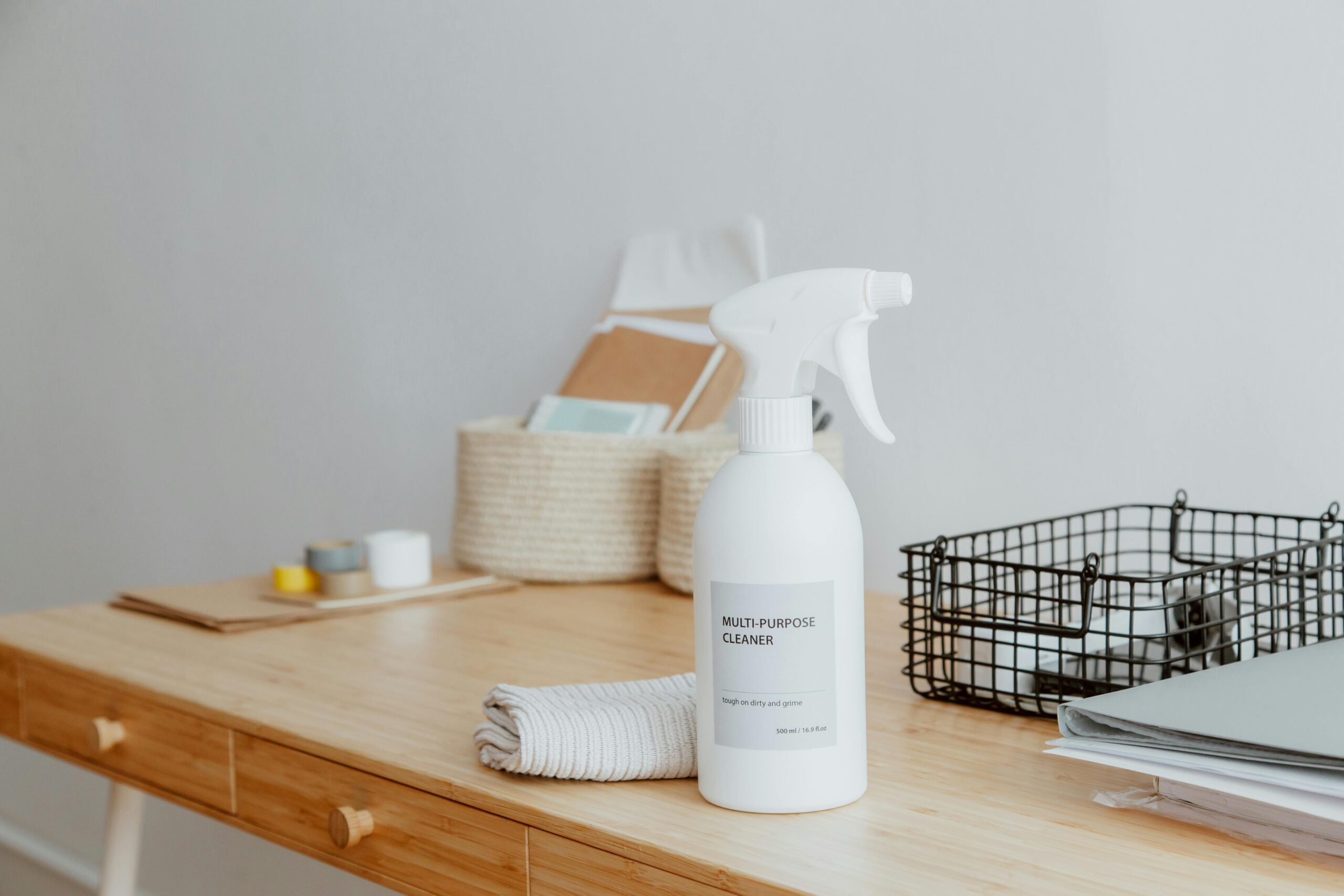
Ever notice how it’s easier to focus after you’ve tidied your desk? Or how clearing the kitchen somehow makes the whole day feel more manageable? That’s not just personal preference — it’s psychology. A clean space often leads to clearer thinking, faster decision-making, and more consistent productivity.
When your environment is cluttered, your brain is constantly filtering irrelevant stimuli. Even if you’re not consciously paying attention to the mess, it’s creating mental noise. The more visual distractions in your line of sight, the harder it is for your brain to settle and stay on task. It’s like trying to concentrate in the middle of a street parade — something’s always pulling your focus.
That’s why many people instinctively tidy before starting work or tackling a project. They’re not procrastinating — they’re actually clearing cognitive space. A clean environment helps your brain focus on one thing at a time, which boosts efficiency and reduces decision fatigue.
There’s also the momentum factor. Cleaning is one of the fastest ways to create a sense of accomplishment. You go from “problem” to “solved” in minutes — no meetings, no approval needed. That quick win can give you a mental boost, making it easier to move into more complex or creative tasks with confidence.
Even short bursts of tidying — like resetting a room in five minutes — can act like a mini productivity ritual. It signals a shift: “I’m clearing the decks. I’m getting ready.” Some people do this every morning before work; others use it as a midday reset. Either way, the benefits go beyond surface-level aesthetics.
And it’s not just about work. Studies have shown that people in clean, organised spaces are more likely to make healthier choices, stick to goals, and even sleep better. That’s because tidiness supports self-regulation — the ability to manage impulses, emotions, and time. In other words, when your space is under control, it’s easier to keep your day under control too.
Of course, this doesn’t mean you need a minimalist home or an Instagram-worthy workspace. It just means that when your environment feels manageable, you feel more capable too. Cleaning becomes less about “keeping up” — and more about setting yourself up to do your best work.
So the next time you’re stuck, distracted, or unmotivated, try this: tidy something small. Clear your desk. Make your bed. Reset the kitchen. Not as a chore — but as a quiet act of mental prep. A way to shift gears, regain focus, and remind yourself that progress can start with something as simple as putting things in place.
Because productivity doesn’t always begin with a to-do list. Sometimes, it starts with a clean table.